The Packaging and Packaging Waste Regulation (PPWR) is reshaping the global market. With strict rules on waste reduction and recyclability, this law impacts every industry and all packaging types across Europe. For investors focusing on green industries and the circular economy, this regulatory shift creates a massive market opening for eco-friendly alternatives, turning a compliance challenge into a major commercial opportunity.
1. Policy Background: EU’s Green Mandate and the New Market Reality

1.1 The Root Cause: Driving the Shift to a Circular Economy
For decades, Europe has faced a severe packaging crisis that traditional recycling could not solve. 40% of all plastics used in the EU go into single-use packaging, most of which ends up in landfills or oceans. Because traditional recycling has failed to solve this disaster, the EU released new regulations to force a systemic change away from fossil-based plastics toward sustainable materials.
1.2 The Launch of PPWR
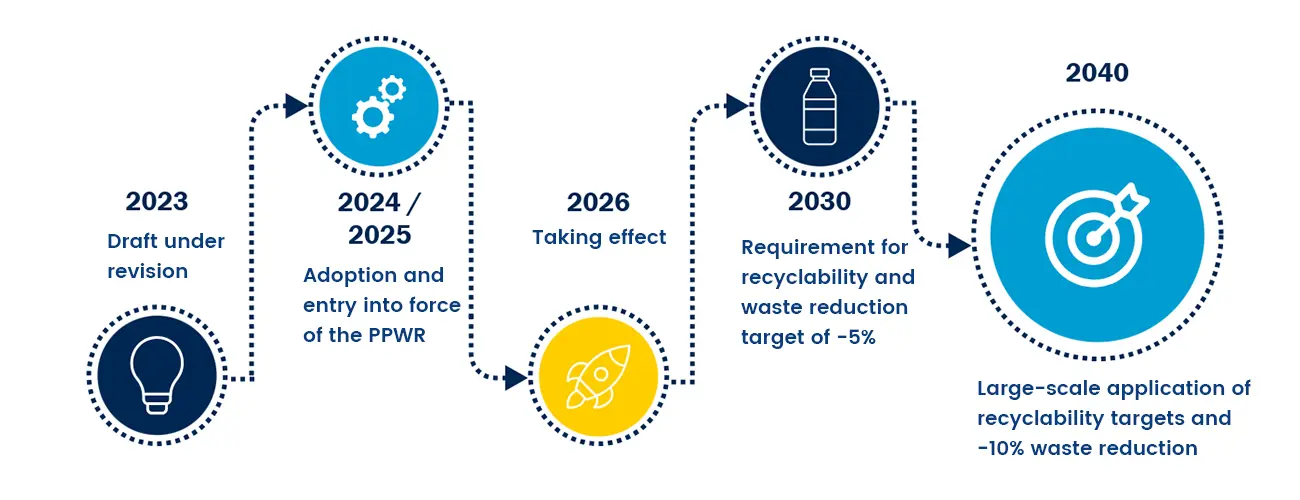
To enforce this shift, the Packaging and Packaging Waste Regulation (PPWR) officially entered into force on February 11, 2025. Following an 18-month transition, its strict, legally binding rules will apply to all 27 EU member states starting August 12, 2026. This law targets the root of the problem by demanding less waste, mandatory recyclability, and the elimination of single-use plastic designs.
2. Core Legal Pillars: Strict Compliance Thresholds and Design Restrictions
The PPWR introduces concrete, measurable targets designed to fundamentally change how packaging is manufactured, used, and processed across all EU member states. The core regulation is built upon three main compliance pillars:
2.1 Waste Reduction and Space Limits
- Waste reduction targets: A mandatory decrease in packaging waste(compared to 2018 levels):
📌 5% by 2030
📌 10% by 2035
📌 15% by 2040 - 50% empty space cap: E-commerce, transport, and logistics packaging must not exceed a 50% maximum empty space ratio. Oversized boxes filled with plastic air pillows are strictly banned.
2.2 Mandatory Recyclability and EU Standardization
- 100% recyclable design: By 2030, all packaging entering the EU market must be fully recyclable.
- A–E performance grading: Packaging will be rated from Grade A to E. Only materials achieving at least “Grade C” are allowed to enter the market.
- EU-wide harmonization: Uniform design rules and standardized labeling replace differing national laws across all 27 member states.
2.3 Food Safety and Chemical Bans
- Zero PFAS policy: Starting in 2026, the EU will strictly ban “forever chemicals” (PFAS) in food-contact packaging.
- Non-toxic materials: Any material touching food must be 100% safe, clean, and free from hazardous plastic coatings or chemical additives.
3. Market Impact: Who Is Affected by the New Policy?
The scope of PPWR is universal and follows the strict principle of Extended Producer Responsibility (EPR). Failure to comply with these obligations by August 12, 2026, will trigger severe administrative and financial penalties across EU member states, including heavy economic fines, immediate sales bans, and forced recalls of non-compliant products. To avoid these catastrophic market risks, the entire global supply chain must adapt immediately.
3.1 Packaging Companies and Global Suppliers
– The Production Sector
- European packaging companies: The law applies to every company placing packaging on the European market, regardless of their sector or size. This includes manufacturers, distributors, and end-users.
- The importer’s legal burden: Global suppliers and foreign importers bringing goods into the EU bear full responsibility. Every company will be systematically required to provide strict proof of traceability and compliance at the border.
3.2 High-Risk Industries Facing Immediate Disruptions
– The End-User Sector
- E-commerce and mass distribution: Retail and logistics giants must completely eliminate oversized boxes and transition to highly customized, space-efficient packaging to meet the empty space cap.
- Catering and food delivery: The food service industry faces the tightest pressure. They must rapidly abandon traditional plastic containers and transition to safe, non-toxic, and easily compostable alternatives.

4. The Road to Compliance: Strategic Choices for Global Brands
Faced with the upcoming August 2026 deadline, enterprises are adopting different compliance strategies based on their industry sector. Three primary paths are currently utilized to meet the new PPWR requirements:
4.1 Increasing Recycled Content in Plastics
- The approach: Integrating post-consumer recycled (PCR) plastics into packaging to meet new EU quotas.
- Key considerations: This allows companies to keep their existing production lines, but operators must manage rising plastic taxes and ensure materials strictly comply with the 2026 food-contact PFAS bans.
4.2 Implementing Reusable Systems
- The approach: Shifting to durable glass, metal, or rigid containers designed for multiple reuse cycles.
- Key considerations: This model works exceptionally well for localized, regional supply chains, though cross-border trade will require additional investment in return logistics and washing infrastructure.
4.3 Transitioning to Plant-Based Molded Pulp
- The approach: Adopting pulp packing for single-use, catering, and industrial applications.
- Key considerations: Made from recycled paper, molded pulp naturally achieves the EU’s highest “Grade A” recyclability rating. It is inherently chemical-free and offers a highly efficient transition for high-volume consumer goods.
5. Beston Group’s Pulp Molding Solutions: Natural Alignment with Compliance
As a global pulp moulding machine supplier, we deliver advanced pulp moulding system that inherently satisfies the EU’s strict environmental benchmarks, offering a seamless transition for international brands.
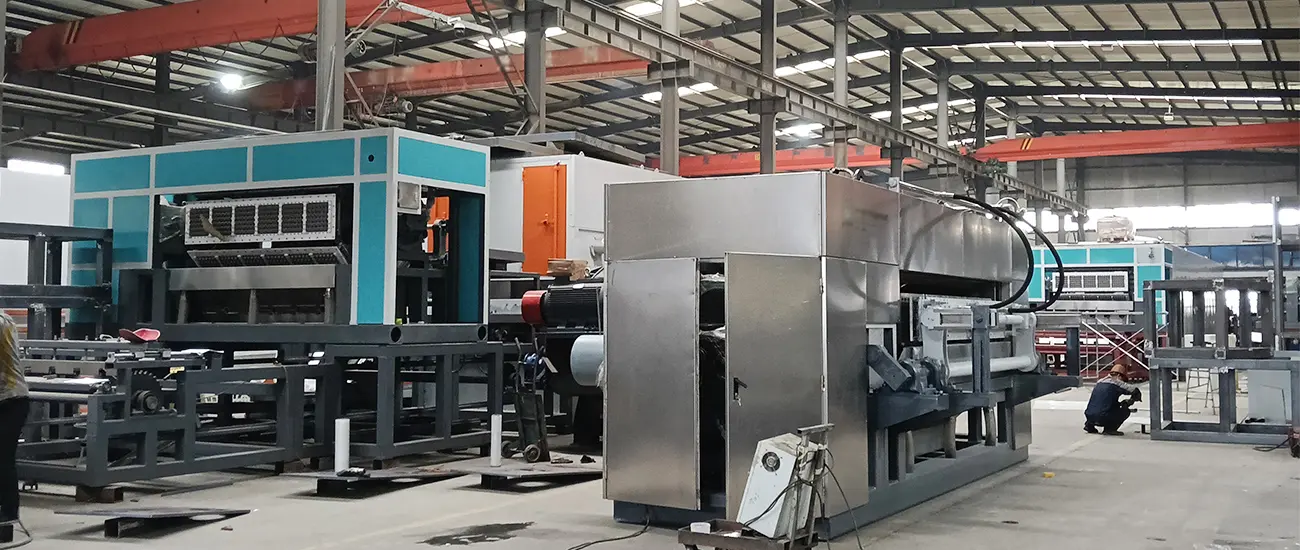
5.1 Advanced CNC Tooling for Zero-Waste Design
Beston industrial packaging lines utilize high-precision CNC mold customization. Our equipment effortlessly produces 1:1 customized, structural inner packaging for electronics and cosmetics. This built-in capability ensures products naturally meet the 50% maximum empty space cap, eliminating the need for traditional plastic cushioning.
5.2 Premium Recycled Paper Engineering for Global Standards
Engineered to maximize circular economy efficiency, our paper tray machine can transform waste paper and cardboard into a wide variety of premium, high-strength protective trays, including egg trays, coffee cup carriers, and fruit trays. It delivers 100% chemical-free solutions that effortlessly pass European recycling standards.
6. Conclusion
With the August 12, 2026, deadline approaching, transitioning to compliant packaging is an urgent business priority. We offer rapid turnkey deployment and localized technical training, helping investors set up automated paper tray production lines to secure their market access and lead the green economy.