
Pulp molded products are becoming more popular worldwide as green alternatives to plastic packaging. They are used in many areas, from farm trays to industrial packing. But quality is the key factor that decides if they can succeed in the market. So, how can we judge the quality of pulp molded products? Why is it important to do so? Keep reading to learn more.
Factors for Evaluating the Quality of Pulp Molded Products
The technical performance of pulp molded products is the primary indicator of their quality. High-quality packaging must protect items effectively while maintaining appearance and structural reliability. Key factors include:
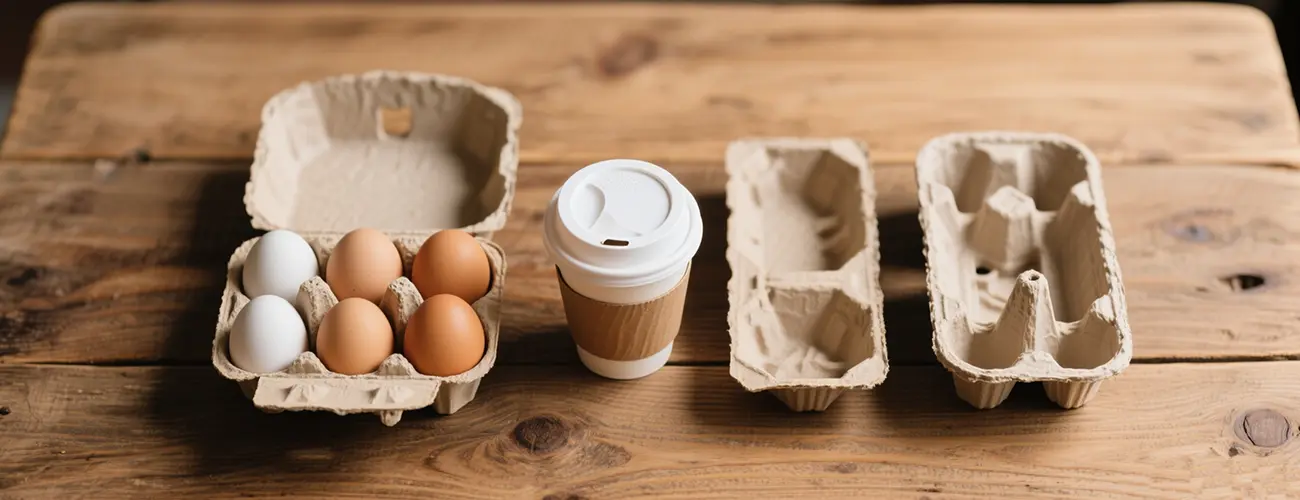
Compression Strength
Ensures the product can bear weight during stacking and transportation, reducing damage and material loss. Pulp trays, like egg trays with high compression strength can withstand long-distance shipping and multi-layer stacking, keeping items inside intact.
Cushioning Capacity
Protects fragile goods such as eggs, fruits, electronics, glassware, or cosmetics from shock and vibration. Strong cushioning performance lowers breakage during transit, improving customer satisfaction and brand reputation.
Moisture Resistance
Prevents warping or weakening in humid environments, ensuring stability under varying climate conditions. Packaging with good moisture resistance is suitable for export transport, minimizing material waste caused by humidity.
Forming Precision
Accurate shapes and consistent dimensions ensure a proper fit with the items being packed, avoiding wasted space and improving overall protection. High-precision molding also enhances the product’s visual appeal, making it more attractive at the point of sale.
Factors Influencing Pulp Products Quality
Behind every high-quality pulp molded product lies a series of controllable factors. These elements directly shape the strength, finish, and overall reliability of the packaging. Understanding these factors helps manufacturers maintain consistency and meet both functional and aesthetic requirements.

Raw Materials
Fiber purity and pulp type affect durability, texture, and performance. For egg trays or basic packaging, recycled paper is sufficient and cost-effective. For industrial or premium packaging, cleaner pulp like bagasse ensures stronger, smoother, and more professional-looking products. Choosing the right material balances quality and cost.

Mold Design
The design and maintenance of molds significantly affect forming accuracy, edge finishing, and dimensional consistency. Well-engineered molds allow for precise shapes, tight tolerances, and smooth edges, while worn or poorly designed molds can produce warped or inconsistent items. Regular maintenance ensures long-term reliability.

Process Control
Careful management of pulp ratios, drying times, pressing pressures, and temperature during production minimizes variability and defects. Consistent process parameters reduce warping, cracking, or uneven density, resulting in products that perform predictably under load.

Production Environment
Stable environmental conditions, including controlled humidity and temperature, are essential for dimensional stability. Fluctuating conditions can lead to expansion, contraction, or moisture absorption, affecting fit and structural integrity. Maintaining a stable production environment ensures uniformity across large batches.
The Importance of Molded Pulp Products Quality Evaluation
Quality evaluation is more than a technical procedure; it is a crucial business safeguard. Ensuring high-quality pulp molded products not only protects goods but also strengthens logistics operations and builds customer confidence. A systematic evaluation of product quality allows manufacturers to reduce risks, improve efficiency, and maintain a strong market reputation.
Logistics Security
Durable pulp molded pro